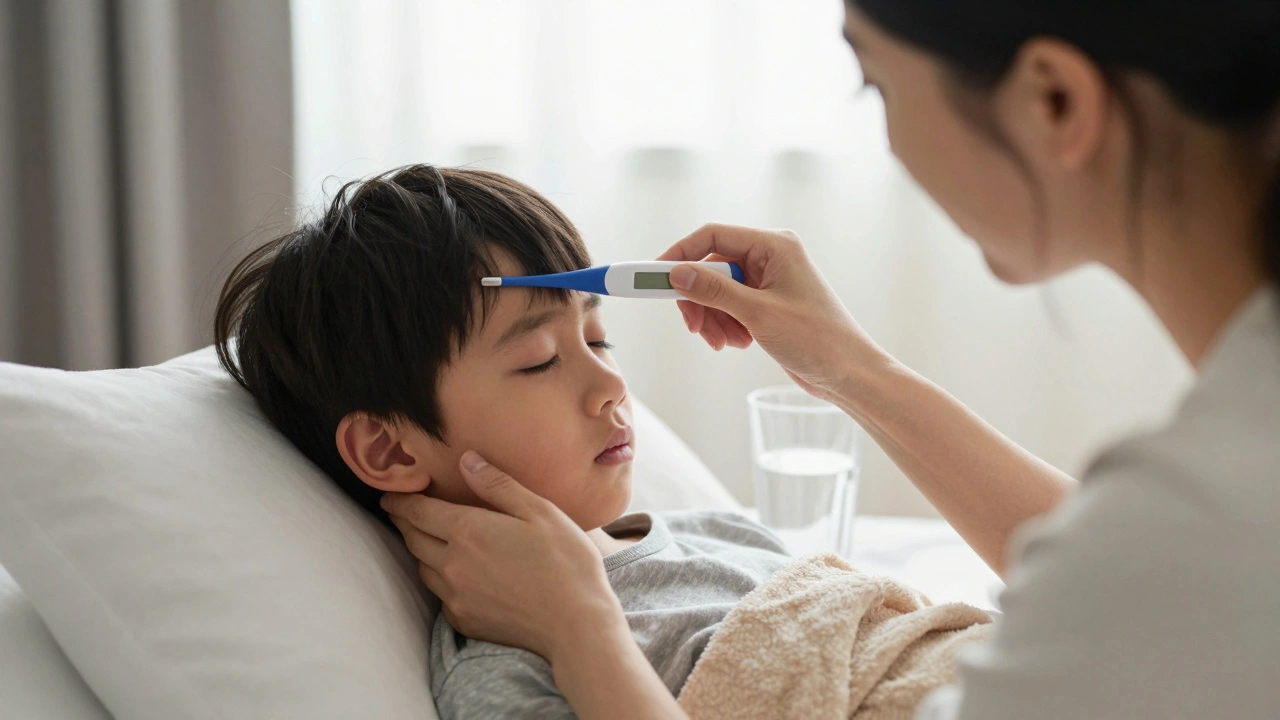
Kdy s horečkou u dítěte k lékaři? Praktický průvodce pro rodiče
Kdy s horečkou u dítěte k lékaři? Naučte se rozpoznat, kdy je horečka normální a kdy vyžaduje okamžitou pomoc. Praktické rady pro rodiče, které vás ušetří nervy a čas.

When to take your child to the doctor isn't always clear — especially when they have a fever, rash, or start wetting the bed again. kdy k lékaři, rozhodování o návštěvě lékaře v dětské péči, kdy příznaky přesahují běžné nemoci a vyžadují odbornou pomoc. Also known as kdy jet k pediatrovi, it's not about being overly cautious — it's about knowing the difference between a passing bug and something that needs attention. Most parents feel this tension: your little one has a fever, a rash appears, or they suddenly stop sleeping through the night. You Google, you panic, you wait. But what if you could spot the real red flags without the stress?
horečka u dětí, teplota nad 38 °C u kojence, která trvá déle než 48 hodin nebo je doprovázena zvracením, nechutenstvím nebo neklidem. Also known as vysoká teplota u dítěte, it's not the number that scares — it's the behavior. A child who is playful despite 39 °C is often fine. A child who is listless at 37.8 °C? That’s the one to watch. And when the fever comes with a rash? Don’t assume it’s just a virus. Some rashes are harmless, like the one from sixth disease, but others — like those linked to meningitis or allergic reactions — need immediate care. vyrážka u dětí, povrchová změna kůže, která může být způsobena virovou infekcí, alergií nebo reakcí na lék. Also known as kožní vyrážka, it’s one of the most confusing signs for parents. Is it chickenpox? A drug reaction? Or just fifth disease, which clears on its own? The key is not the look — it’s the combination: Does your child seem sick? Is the rash spreading fast? Does it hurt or itch badly? If yes, don’t wait. And then there’s noční pomočování, nevolní močení během spánku u dětí starších než 5 let, které není nemocí, ale může být příznakem problémů s ledvinami, močovými cestami nebo nervovým systémem. Also known as enuréza, it’s normal up to age seven — but if it starts suddenly after months of dry nights, or if your child complains of pain when peeing, it’s time to check. These aren’t random issues — they’re connected. A fever can hide a kidney infection. A rash can be the first sign of something serious. Bedwetting can point to a urinary tract problem you didn’t even know about.
That’s why this collection exists. You’ll find clear, no-nonsense answers: how long a rash lasts with each common childhood illness, when a fever becomes dangerous, what to do when your child stops peeing, and how to tell if it’s just a virus or something that needs a doctor. No fluff. No scare tactics. Just what you need to know to act — or relax — with confidence.
Kdy s horečkou u dítěte k lékaři? Naučte se rozpoznat, kdy je horečka normální a kdy vyžaduje okamžitou pomoc. Praktické rady pro rodiče, které vás ušetří nervy a čas.