Kdy je horečka nebezpečná?
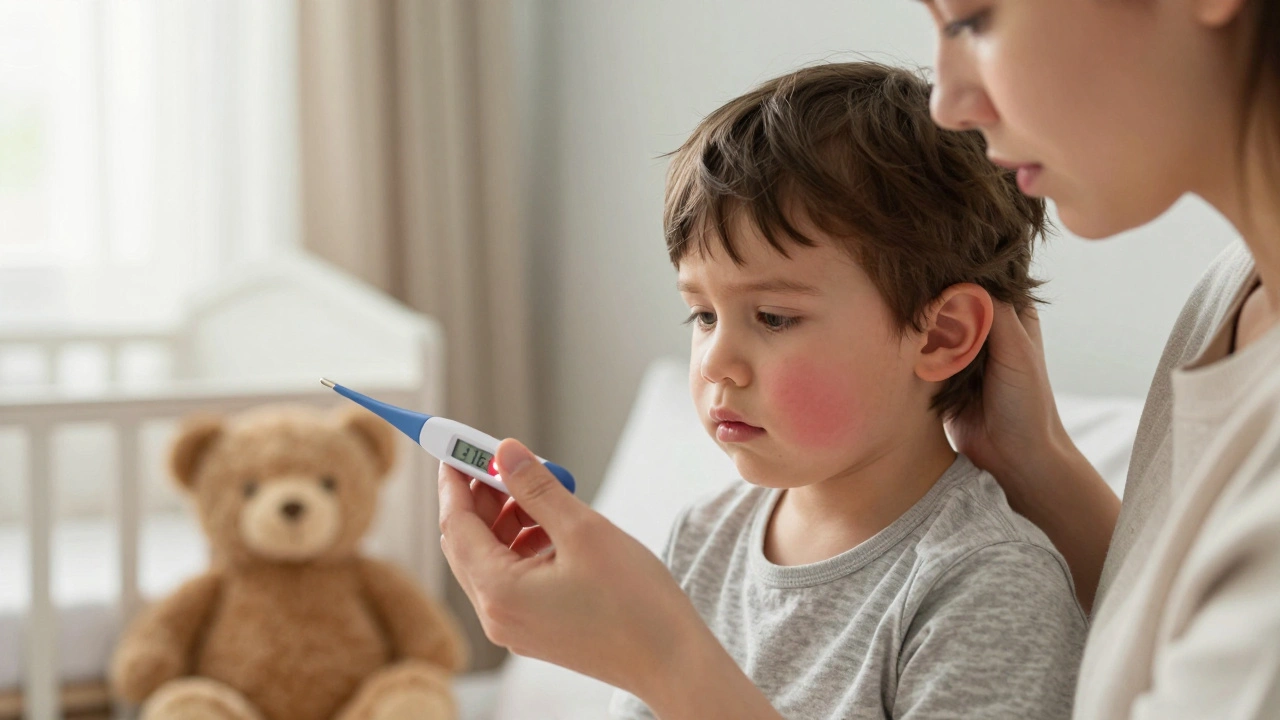
When a child has a fever, it’s not the temperature itself that’s scary—it’s what it might mean. horečka, teplotní reakce těla na infekci nebo zánět. Also known as vysoká teplota, it’s the body’s way of fighting off viruses or bacteria, not a disease on its own. Many parents panic when the thermometer hits 38.5 °C, but fever is often a good sign: the immune system is working. The real danger lies not in the number, but in how the child behaves, how long it lasts, and what other symptoms come with it.
One of the most common fears is febrilní křeče, krátké křeče u dětí vyvolané náhlým vzestupem teploty. They look terrifying—eyes rolling, limbs stiffening—but in over 90% of cases, they’re harmless and don’t cause brain damage or epilepsy. Still, if a seizure lasts longer than 5 minutes, or if your child doesn’t wake up after it, call emergency services immediately. Another red flag is a fever that won’t go down after 3 days, even with paracetamol or ibuprofen. That’s when you need to dig deeper—maybe it’s a urinary tract infection, pneumonia, or something else hiding behind the fever.
Don’t forget the little signs: Is your child drinking? If they’re not urinating for 8 hours, they’re dehydrating. Are they unusually sleepy, hard to wake, or refusing to move? Do they have a rash that doesn’t fade when you press on it? Is their breathing fast or noisy? These aren’t just "symptoms"—they’re your child’s way of screaming for help. And yes, even if the fever is "only" 38.2 °C, if your baby is under 3 months old, treat it like an emergency. Their immune system isn’t ready to fight alone.
What you shouldn’t do: drown them in blankets, sponge them with cold water, or give aspirin. What you should do: keep them lightly dressed, offer fluids constantly, and monitor their behavior more than their temperature. A child who plays, laughs, and drinks water with a fever of 39.5 °C is usually fine. A child who lies quietly, doesn’t respond to you, and has cold hands with a fever of 38 °C? That’s the one you take to the doctor—right now.
Below, you’ll find real-life guides from pediatricians on how to recognize the difference between a harmless fever and something that needs urgent care. From what to do when your toddler has a fever after vaccination, to how to spot early signs of kidney infection or pneumonia, these posts give you the exact clues to look for. No theory. No fluff. Just what works when your child is burning up and you need to decide: stay home or rush to the hospital.